You searched for "LASER"
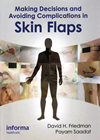
Making Decisions and Avoiding Complications in Skin Flaps
Whereas modern readings on reconstructive surgery impress by their high-quality graphic illustrations on heavy glossy paper next to lengthy discussions, this book has a remarkably unpretentious appearance. At first glance it becomes clear that the reader should not expect a...
Facial asymmetry in patients with deviated noses
Rhinoplasty of a deviated nose is known to be a challenge of its own kind, especially when patients presenting with a deviated nose are unaware of their underlying facial asymmetry. Patients with a successfully straightened nose, continue to perceive their...
Clinical histopathology of 250 parotidectomy patients
This is a retrospective study of 250 consecutive parotidectomy patients at units in Belgium and the Netherlands. The sensitivity and specificity of FNAC was 64% and 99% respectively. The sensitivity being slightly lower than the often quoted 80%. MRI and...
Postoperative follow-up of oral squamous cell carcinoma: a new protocol
Oral and oropharyngeal cancers together are the sixth most common malignancy in the world, with an increasing incidence of oral squamous cell carcinoma (OSCC). The recurrence rate of OSCC is reported to be approximately 10-26%. About two-thirds of all recurrent...
Ablepharon-macrostomia syndrome
The ablepharon-macrostomia syndrome is a very rare condition caused by a dominant mutation in the TWIST2 gene. Congenital defects include rudimentary eyelids, macrostomia, ambiguous genitalia and campodactyly. Neonates are at risk of severe corneal exposure without intervention. Previous reports have...
Approach to the orbital floor, which is better?
During skeletal surgery sufficient exposure is key, often a direct approach through the overlying tissues is the easiest route. In the face, however, as the scar would be readily visible so approaches are designed to hide this. Surgical access to...In conversation with Anna Baker
The PMFA Journal team were delighted to chat to Anna Baker, Aesthetic Nurse Prescriber, about the importance of continuing professional development (CPD) for those in the field of aesthetic medicine. What do you think is the purpose of CPD? The...‘Split’ earlobe repair
Surgical repair of the earlobe is an increasingly sought-after procedure for patients of all ages. The most common reason for those wanting definitive surgical repair of their earlobe deformity is due to a ‘split’ or elongated earlobe piercing. The resultant...Recent developments in hyaluronic acid research
Hyaluronic acid has a role in many medical specialties, not just aesthetics. Anna Baker takes us through the latest evidence and therapeutic indications. The evidence and demand for hyaluronic acid (HA) based technologies continues to expand and evolve across a...Temple filler: an unusual complication
This article has been verified for CPD. Click the button below to answer a few short questions and download a form to be included in your CPD folder. Hollowing of the temples is one the earliest signs of ageing, creating...Gross Negligence Manslaughter in Healthcare: The medico-legal dilemma (part 25)
Time out I am taking a time out because I want to go back to 2014. At that time there were no mandatory guidelines regarding the administration of procedural sedation in cosmetic practice in Hong Kong. Because of the call...