You searched for "consultation"
How I Do It - Contouring the lower jaw (non-surgical)
It is important to invest time in analysing the lower aspect of the face whilst in discussion with the patient to establish a mutual agreement as to the level of desired correction along with the choice of product. I find...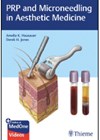
PRP and Microneedling in Aesthetic Medicine
Platelet rich plasma (PRP) makes sense scientifically. Platelets are a bit like biological robots. They do not have a cell nucleus, but they do have a program which directs them to surveil blood vessel walls and, in particular, to respond...First UK doctor dies due to Covid-19
An ear, nose and throat consultant has become the first UK doctor confirmed to have died of coronavirus.A comparison of academic output of Welsh burns and plastic surgery trainees pre- and mid-COVID-19 pandemic: a cross-sectional study
The COVID-19 pandemic has affected the work of doctors worldwide, with surgical resources being diverted and non-emergency surgeries postponed. With surgical activity at 33.6% of expected levels in 2020, this sudden, vast decrease in surgical activity may have granted some...In conversation with Firas Al-Niaimi
We were delighted to catch up with Dr Firas Al-Niaimi about his career. You are internationally recognised in the fields of Mohs surgery, lasers and dermatology – can you tell us a little bit about your background? I grew up...How I Do It - Healing difficult wounds non-surgically with focused extracorporeal shockwave therapy
A pre-tibial laceration is a common and serious wound, particularly in the elderly where co-morbidity from smoking, peripheral vascular disease, diabetes, malnutrition and tissue-paper-thin skin are major influencers of outcome. Degloving injuries may be seen as preterminal events in the...BCAM celebrates excellence in aesthetic medicine: Five doctors achieve MBCAM certification
The British College of Aesthetic Medicine (BCAM) is delighted to announce that Dr Stephanie Dixon, Dr Alexander Parys, Dr Ducu Botoaca, Dr Emmaline Ashley, and Dr Luting Xu have successfully completed the MBCAM (Member of the British College of Aesthetic...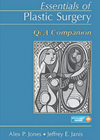
Essentials of Plastic Surgery: Q&A Companion
This excellent second edition of Q&A Companion of the very well-established Essentials of Plastic Surgery by Dr Jeffrey Janis provides a complete and detailed overview of the entire plastic surgery syllabus. All material is up-to-date and has been written as...OPINION - Impact of the Paterson Inquiry on the cosmetic and aesthetics sector
On 15 December 2022, The Department of Health and Social Care published the ‘Government response to the independent inquiry report into the issues raised by former surgeon Ian Paterson: 12-month implementation progress update’. The reference documents (which apply to England)...British Foundation for International Surgery and Training
Two of the UK’s most innovative Plastic Surgeons, Barbara Jemec and Wee Lam, give a fascinating account of the work of BFIRST overseas and, perhaps most importantly, explain how you can get involved. The British Foundation for International Surgery and...