This article has been verified for CPD. Click the button below to answer a few
short questions and download a form to be included in your CPD folder.

The lips constitute one of the most important facial aesthetic units. Due to their musculature, they also form the most movable part of the face, contributing significantly to facial expressions and perceptions of attractiveness. Correct treatment planning requires correct diagnosis, which in turn relies on methodical, thorough and accurate clinical evaluation.
Systematic clinical evaluation of the lips requires analysis of a number of parameters, which may be conveniently remembered with the acronym LAMPP: lip lines, activity (function), morphology (form), posture and prominence. Thorough clinical evaluation of the lips is beyond the scope of this article and may be found elsewhere [1]. The purpose of this article is to provide a very brief overview of the analysis of lip prominence, and to describe a simple method of clinical evaluation.
Aetiology of lip prominence
Identification of the aetiology of lip prominence permits formulation of an appropriate treatment plan. The aetiology of lip prominence depends on a number of factors, which may be categorised as soft tissue, skeletal or dentoalveolar.
Soft tissue factors
These factors relate to the morphology and thickness of the lips. Thick, flaccid lips are more prominent than thin lips. If the enlargement and prominence of the lips is due to the morphology and thickness of the lips, significant improvement may be obtained by excision of an elliptical wedge of soft tissue behind the margin of the wet line (the area of lip mucosa behind the lip seal region), varying in width depending on the amount of reduction required [2]. In cases where the lip prominence is due to the underlying dentoalveolar protrusion, surgical lip reduction will not achieve the desired improvement without correction of the incisor position.
Skeletal factors
A reduced lower anterior face height may compress the upper and lower lips together, leading to protrusion of the lips. Increasing the lower anterior face height may in itself correct the lip prominence when this is the underlying aetiological factor.
Dentoalveolar factors
Sagittal position of the incisor teeth This is an important factor, providing support to the lips by the dentition. Maxillary and / or mandibular dentoalveolar protrusion / retrusion refers to the protrusion / retrusion of the dentoalveolar processes relative to the basal bone of the maxilla and mandible.
Inclination of the incisor teeth
Proclination of the incisor teeth will tend to make the lips more prominent, particularly if the lips are thin. The effect on thick, flaccid lips tends to be minimal. Conversely, retroclination of the incisor teeth will tend to cause lip retrusion, sometimes referred to as ‘flattening’ or ‘dishing-in’ of the lower facial profile. This may occur if premolar extractions and incisor retroclination or retraction has occurred due to incorrect diagnosis and poor technical orthodontic treatment. Nevertheless, the effect will depend to a great extent on the morphology and thickness of the lips.


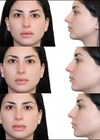
Figure 1: (Top) Bilabial prominence due to bimaxillary incisor proclination; (Bottom) Orthodontic retroclination of the incisor teeth by over 25 degrees and their bodily retraction allowed concomitant retroclination of the overlying lips, reducing bilabial prominence.
Where lip prominence is related to excessive dentoalveolar protrusion and / or proclination in the presence of an incomplete lip seal (also referred to as lip incompetence), retraction of the incisor teeth will improve lip posture and reduce lip prominence, improving the facial profile (Figure 1). However, if the lips are prominent but lip seal can be achieved without lip strain (competent lip posture), the lip posture is due to the morphology of the lips and will not alter with changes in incisor position.
Aesthetic evaluation
Evaluation should be undertaken with the patient in their natural head position (NHP), the mandible in the rest position and the lips in repose. Each analysis used in facial aesthetic evaluation requires one or more reference lines, which are formed by joining some reference landmarks or points (other than the true horizontal and true vertical lines). Therefore, the effectiveness and practicality of each analysis depends on whether the selected reference points are in ‘ideal’ positions and thereby depends significantly on the presenting dentofacial deformity. For example, the sagittal position of the lips and chin may be related to a true vertical line through subnasale, but this will only be useful if the sagittal position of subnasale is correct (Figure 2).

Figure 2: The prominence of the upper lip may be related to a true vertical line passing through subnasale (subnasale vertical or SnV line, shown in blue) [1]. The prominence of the upper and lower lip relative to this line are as follows: Labrale superius of upper lip is approximately 1-2mm in front of SnV; Labrale inferius of lower lip is approximately on or 1mm behind SnV.
Aesthetic analyses are not rules to follow uncritically, but provide guidance and help improve our understanding of facial aesthetics. The prominence of the lips is visually evaluated relative to the prominence of the nose and chin. In fact, in profile view, the prominence of the nose, lips and chin are all relative to one another. A number of analyses have been described, which aid in the evaluation of the relative prominence of the upper and lower lips to the facial profile, in particular to the nose and chin. These have been described in detail elsewhere [1]. Of these, a potentially useful analysis of lip prominence is the aesthetic triangle [3], which is relatively simple to apply. It is based on three analyses: the E-line, S-line, and Sn-Pog’ line.
E-line (Ricketts)
Upper and lower lip prominence may be measured in relation to the ‘Esthetic’ (nose-chin) line, drawn from pronasale (Prn) to soft tissue pogonion (Pog’) [4]. This measurement is highly dependent on nasal tip and chin projection. In white Caucasians, the average suggested values are:
- Upper lip (labrale superius, Ls): -4 to -6mm behind E-line
- Lower lip (labrale inferius, Li): -2 to -4mm behind E-line
The E-line is influenced by the age, sex and ethnicity of the patient. At age 10, the lips are only slightly behind the E-line. Subsequent growth of the chin and in particular the nose carries the E-line forwards away from the lips during growth. On average, the upper lip drops back approximately 0.4mm/year relative to the E-line during growth; the lower lip drops back 0.2mm/year. If at age 10 the lips are significantly behind the E-line, the lower facial profile is likely to remain or become more retrusive with growth.
The slightly greater relative lip prominence in women is partly due to reduced nasal projection. In terms of ethnicity, Black individuals tend to have more prominent lips, due to greater soft tissue lip thickness and a tendency to bimaxillary dentoalveolar protrusion. There is also a tendency for reduced prominence of the nose and the chin compared with Caucasian populations.
Attractiveness research data has demonstrated that relative bilabial prominence appears to be viewed as more attractive than bilabial retrusion in Caucasian patients [5].
S-line (Steiner)
The S-line is drawn from the midpoint of the S-shaped curve between subnasale and pronasale to soft tissue pogonion (Pog’) [6]. According to this analysis, the lips should lie approximately on this line. Behind this line the lips appear retrusive, and in front of this line they begin to appear protrusive. This line appears in a number of drawings by the Renaissance artist Albrecht Dürer [1]. It helps to reduce reliance on the nasal tip projection.
Sn-Pog’ line (Burstone)
Upper and lower lip prominence may be measured in relation to the subnasale-soft tissue pogonion (Sn-Pog’) line. This will eliminate the nose from the analysis [7]. The normal values for white Caucasians reported were:
- Upper lip protrudes 3.5 ± 1mm
- Lower lip protrudes 2 ± 1mm.
These three lines may be used to form an aesthetic triangle to evaluate lip prominence.

Figure 3: With the patient in NHP, the lips should fall between the aesthetic triangle formed by the Sn-Pog’ line (yellow line) and E-line (green line) [3]. Behind the triangle (i.e. behind the Sn-Pog’ line), the lips will appear retrusive, and too far ahead of the triangle (i.e. ahead of the E-line), they will appear excessively prominent. The triangle may be separated into anterior and posterior compartments by the Cp-Pog’ line, shown in red. Lips falling within the posterior compartment (marked as 1, shaded yellow) tend to be perceived as the most attractive, and lips falling within the anterior compartment of the triangle (marked as 2, shaded in green) will tend to be perceived as being on the protrusive side of average. Sn, subnasale; Cp, columella point; Prn, pronasale; Pog’, soft tissue pogonion.
Aesthetic triangle
With the patient in NHP, the lips should fall between the Sn-Pog’ line and the E-line. This analysis applies in most clinical presentations for Caucasian patients (Figure 3) [3]. Behind the triangle, the lips will appear retrusive, and too far ahead of the triangle, they will appear excessively protrusive. Within the triangle, the prominence of the lips tends to be within the limits of average variability in terms of perceived attractiveness. Lips falling within the anterior compartment of the triangle will tend to be perceived as being on the protrusive side of average.
Concluding remarks
Over the last decade or so, facial aesthetic surgery has seen a shift in focus from emphasising accurate diagnosis and logical treatment planning, which are the prerequisites to successful treatment, towards excessive attention and reliance on technical modalities and materials. Both are important, but the latter should never be at the expense of the former. Short technical courses cannot replace years of sustained effort in understanding facial aesthetic analysis. It is incumbent on each facial aesthetic practitioner, from whichever specialty, to spend a considerable amount of time in honing the skills of diagnosis and treatment planning.
References
1. Naini FB. Facial regional analysis: The lips. In: Naini FB. Facial Aesthetics: Concepts and Clinical Diagnosis. Second Edition. Oxford: Wiley-Blackwell, 2025.
2. Niamtu J. Surgical options for aesthetic enhancement of the lips and perioral region. In: Naini FB, Gill DS (eds). Orthognathic Surgery: Principles, Planning and Practice. Oxford: Wiley-Blackwell, 2017.
3. Naini FB, Gill DS. Patient evaluation and clinical diagnosis. In: Naini FB, Gill DS (eds). Orthognathic Surgery: Principles, Planning and Practice. Oxford: Wiley-Blackwell, 2017.
4. Ricketts RM. A foundation for cephalometric communication. Am J Orthod 1960;46:330–57.
5. Naini FB, Garagiola U, Cobourne MT, et al. Quantitative investigation of the aesthetic impact of lip prominence in relation to the E-line. Am J Orthod Dentofacial Orthop 2021;159(5):574–81.
6. Steiner CC. Cephalometrics for you and me. Am J Orthod 1953;39:729–55.
7. Burstone CJ, James RB, Legan H, Murphy GA, Norton LA. Cephalometrics for orthognathic surgery. J Oral Surg 1978;36:269–77.
Further reading
Naini FB. Facial Aesthetics: Concepts and Clinical Diagnosis. Second Edition. Oxford: Wiley-Blackwell, 2025.
Declaration of competing interests: None declared.