
You searched for "facial"
Preferred upper / lower lip ratio and perception of naturally looking lips, a study across generations and genders
Introduction ‘Beauty is in the eye of the beholder’. Although it sounds true, most often some beauty patterns or preferences can be innate or intuitive [1]. When it comes to the ideal lips, how much of their features can be...Suspension thread lift combination treatments
A true facelift can only be achieved through surgical means, at least for now, and given advances in techniques and anaesthesia, this has become far safer. Not everyone, however, requires a facelift. Non-surgical modalities such as thread lifts with or...
What is the best graft for nose surgery in the long-term?
The authors of this paper performed an experimental study on long-term histological changes in different grafts implanted subcutaneously in 25 New Zealand white rabbits. Ear cartilage, rib cartilage, autologous fascia, fascia allograft, diced rib and ear cartilage wrapped in autologous...In conversation with Professor Peter Adamson
We were delighted to catch up with Peter A Adamson, Professor of the Division of Facial Plastic and Reconstructive Surgery, Department of Otolaryngology - Head and Neck Surgery, University of Toronto. Professor Peter A Adamson. Can you tell us a...
Submental island flap to reconstruct the lower lip
The lips are necessary for oral competence, cosmesis, speech and feeding. Non melanoma cancers can affect the lips, and the lower lips are about 80% more likely to be affected. A large number of these cancers are squamous cell carcinomas....
Non-surgical periocular aesthetics
The periocular region is the focal point of facial communication. Millimetre increments of change required to achieve bilateral symmetry and harmony can be difficult to achieve by surgical means only. Non-surgical aesthetic modifications offer a number of advantages in selected...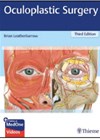
Oculoplastic Surgery, 3rd Edition
This is a single author textbook in its third edition that reflects the author’s extensive experience and also their detailed, methodical and organised approach to oculoplastic, orbital and lacrimal surgery. It is a widely known and popular textbook, not only...
Three-dimensional visualisation of the human face using DICOM data
This is an extended case report and something I would not normally review for the purposes of PMFA News. However, we should welcome innovation and use of simple technologies to potentially improve clinical care. This study describes the use of...
Classification of maxillofacial pain
The patient that presents with oral and facial pain can prove a diagnostic conundrum. Whilst most often dental causes can explain the origin and help from our maxillofacial colleagues is warranted, it is useful to have a system for approaching...
Righting the paralysed lip
Many surgical procedures that otolaryngologists perform put the facial nerve at risk of injury, a complication that the surgeon and patient fear alike. Unfortunately, injuries to the nerve can and do happen despite adequate precautions, and facial paralysis may be...
The initial management of nasal trauma
Nasal trauma and fractures are some of the most prevalent clinical problems in a facial surgery practice. Fractures of the nose are the most common facial fractures and reported to be the third most common fracture of the human skeleton....