
You searched for "Skin"
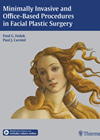
Minimally Invasive and Office-Based Procedures in Facial Plastic Surgery
The authors of Minimally Invasive and Office-Based Procedures in Facial Plastic Surgery share their expertise of the fast-evolving field of minimally invasive procedures in aesthetic facial rejuvenation in this informative textbook. The content of Minimally Invasive and Office-Based Procedures in...Fillmed UK Training: An Introduction to NCTF – Full Face Bio-Regeneration - Birmingham
This training is for medics only. This one-day introductory course has both theory and practical components. Indications, contraindications, case selection and skin preparation and post treatment directions will be discussed. Delegates will learn how to perform the NCTF treatment protocols...Fillmed UK Training: An Introduction to NCTF - Full Face Bio-regeneration - London
This training is for medics only. This one-day introductory course has both theory and practical components. Indications, contraindications, case selection and skin preparation and post treatment directions will be discussed. Delegates will learn how to perform the NCTF treatment protocols...The truth behind facelift myths
As the number of non-surgical options to treat the ageing face has increased in recent years, so have the number of myths about facelift surgery. This article, from two expert facial plastic surgeons from Stanford Hospital in California, provides the...Focus on: Cosmeceuticals (part 2 - continued)
The previous sections in this special focus (see Cosmeceuticals (part 2) and Skin anatomy and photoageing and Definitions, regulations and a review of the market) have covered skin anatomy, photoageing and cosmeceutical ingredients in detail. In this section I will...
Treatment of vertical alar discrepancy
This article explains the way to treat vertical alar discrepancy through alar crease and alar sulcus full-thickness incisions and advancement-rotation of the alar flaps. The authors divide the group of patients into three main categories depending on the vertical movement...
Purse string closure after excision of paediatric facial lesions
Circular excision and purse-string closure has been described for infantile haemangiomas as an alternative to lenticular excision. Records of 77 consecutive paediatric patients with facial skin lesions treated with circular excision and purse-string closure from 2007-2014 were reviewed. Lesions excised...
Reconstruction paediatric lower facial defects with an expanded flap from the submental region
Lower facial and perioral scars from burns or defects following treatment of vascular lesions can lead to serious facial deformity with lip ectropion and asymmetry. Conventional reconstructive methods like skin grafts or free flaps do not always give a satisfactory...
Malar mounds and festoons
Periorbital rejuvenation and blepharoplasty, in particular, are very common procedures nowadays in aesthetic practice. More than 153,000 blepharoplasty procedures were peformed in the USA during 2012. Blepharoplasty can sometimes be a very challenging surgery, especially if the patient presents with...How I Do It - Body contouring: a combined, non-invasive protocol
Non-invasive body contouring has become one of the fastest-growing areas of aesthetic medicine today. There are many approaches to reducing body fat tissue and improving skin laxity, such as cryolipolysis, high-intensity focused ultrasound, radiofrequency, and a variety of laser therapies....
Managing photodamage
The authors explore components of skin ageing, discussing extrinsic as well as intrinsic factors, with the focus upon the process of photoageing. The anatomy of the epidermis is discussed, supported by diagrams, in relation to extrinsic factors inducing photodamage, in...