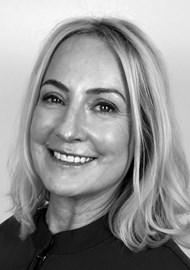

Jude Dunican.
Elaine Williams: I still remember the day we first met, with you coming into the clinic on behalf of Health Xchange back in 2018. We quite quickly got into developing ourselves professionally from that very first meeting, and I think the readers will be interested in understanding a little bit about your journey into aesthetic medicine, because it’s broad and it spans 20 years.
Jude Dunican: Thank you so much for having me, Elaine. I suppose, where it all began and where we are at the moment – I’m Jude and I’m an aesthetic nurse. I’m an independent nurse prescriber and I’m somebody who’s worked in aesthetic medicine for quite a long time. My career began in Ireland. I worked with lasers and energy-based devices in a private hospital in Galway, and I’ve always had a massive passion for skin and anti-ageing. As somebody who suffered from acne when I was younger, skin health is something that I am always thinking about. I worked for a surgeon and that was really where I made the decision to get into aesthetic nursing.
I came to London in 2015 and I became the head nurse at a five-star clinic on Harley Street, and I was surrounded by incredible practitioners and cutting-edge devices. I was working full-time in this clinic – every device, every treatment you could think of was at my disposal. That’s what shaped the way I work today, and it really gave me the grounding to grow as a practitioner and also as a mentor. So, it started in Ireland and then I came over here to the UK and it has developed since then.
How has your background in nursing shaped the practitioner that you are today?
Nursing is really the foundation of everything I do. Being a nurse has taught me critical thinking, problem solving, and everything that I do is evidence-based. Education has been very important to me as well. I was one of the first practitioners to do the level 7 in aesthetic medicine. I started that in 2016, and everything that I was learning in the clinic was consolidated in theory – it was an amazing experience. I went on to do a masters in 2021 – that acted as the academic qualification that sat alongside the vocational qualification. Some people might think it was quite a lot to do, but I think it fitted in nicely to get the two qualifications. One was a bit more practical and the other was more academic; a nice combination for me.
I see you as really education driven. You work for a number of different companies offering skills-based education. Can you tell us a little bit about that?
I absolutely love education. I love teaching and learning, and I’ve spent my whole career as an educator. I had an education role in Ireland way back in 2007. It’s something that comes naturally to me. I get a lot of joy from sharing knowledge and helping others grow. I recently completed a PG certificate in medical education, which I felt was important given my current position. I was a clinical educator with Health Xchange for a number of years. Now, I like to mix how I spend my days – having clinic days, which I love and get a lot of joy from, and then some time spent on education and training, because that’s one of my foundational qualities.
You have contributed to the development of the British Association of Medical Aesthetic Nurses (BAMAN). You also were the expert marker on a level 7 course. What is the most rewarding and the most challenging aspects of aesthetic medicine?
One of the rewarding aspects of it is giving people back their confidence. Helping people feel a little bit better in their own skin. On a training and teaching level, it’s inspiring confidence in people that I mentor or train.
A challenge would be when you’re working in isolation, you don’t have that line manager to go to, that senior nurse to ask questions. One of the biggest pieces of advice that I would give to anybody working in aesthetic medicine is to connect with a community.
"It’s not a sprint, it’s a marathon. There’s lots more to learn, lots more to achieve, so just make sure that you have some good people around you for your journey"
Another – other people’s expectations and managing. We’re living in a world of social media and unrealistic ideals, and people can bring a lot of emotional layers into a consultation. One lesson: be very honest with what is achievable and what might not be achievable within the clinical room.
You also work at Chelsea and Westminster Hospital. Can you share a bit about that?
It’s something that I feel really passionate about. I’m one of the specialist nurses in the facial lipoatrophy clinic. This is a condition affecting patients for different reasons, whereby the fat in the face has been damaged. I work with HIV-positive patients who have developed this disease of the subcutaneous layer within the face through the medication that they were given; helping them feel a little bit better when they look in the mirror. I really enjoy doing this work and there’s some absolutely fabulous nurses in the NHS who have dedicated their lives to these patients.
It’s important as a practitioner to keep your career varied, not to fall into a routine where you’re not challenging yourself. I think that would be very easy to happen if you are working in isolation. I decided last year that I was going to work a little more on my writing and I have another couple of articles to do.
You’ve done so much, absolutely inspirational. I think newly qualified or student nurses would be inspired by your journey and that drive to continually learn and share in lots of different formats.
It’s really funny because when you’re in it, you don’t see it as inspirational. But I do get a lot of younger nurses reaching out to me, asking me, “How did you get into aesthetic nursing? What did you do? What was your education?” I really enjoy guiding and advising them on clinical pathways into aesthetic nursing with an emphasis on education. Education is the reason that I’ve been successful, pushing myself and really focusing on education within nursing, but also within aesthetic practice.
That brings me to Aesthetic Nurse Mentors, which I need to tell the readers, we co-founded together. The idea came from you initially…
There’s no true career trajectory or career guidance as an aesthetic nurse. A lot of people come into it for different reasons. A lot of people leave the NHS and start working on their own, so there’s many different levels of exposure, levels of experience, and I think what happens is a lot of people do their training and then they’re suddenly saying to themselves, “Where do I go next?”
Aesthetic Nurse Mentors was an idea that we came up with together, and it’s grounded in the notion that we should be seeking mentorship; this continuous elevation of ourselves through the guidance of other people who have been on that journey already. Everyone’s career trajectory is very different. A doctor’s and a dentist’s career paths are very different from a nurse, so who is better to guide and mentor you than another nurse. It was set up by nurses for nurses – it’s really an empowered space where we offer clinical mentorship and guidance on clinical skills, career progression and building a business, because there’s many aspects and facets to aesthetic nursing and you need to really include all of it. You have to be good at all of it. I remember when I left the safety of my clinic and went out on my own. I just wanted any new clinical skills that I could learn. I just wanted somebody to be there to say, “Yes, that’s right. You’re doing a good job.” So just being able to provide that type of opportunity in an accessible way, so that it’s not overwhelming to the mentee, is great.
And how do you think that mentoring is different from training and what makes it different from going on a training course? And why is it valuable in your opinion?
Mentorship is really different from training. Training is a more structured activity for example taking on a new skill like doing lip filler, something like that. There’s a beginning, a middle, and an end. A mentorship is quite different – it’s a journey – it’s a relationship that’s built up over time, fostering trust and helping that person elevate as a practitioner in many ways. I think it’s important to define the difference between both. Obviously, both are very important activities, but they are quite different.
I would say that what differentiates them both in a really simple way is that if you attended a training course, the people in the training course set the objectives for that day and set the outcomes. You’re going to learn about anatomy. You’re going to learn about technique, and then you will apply your skills. With a mentoring session, the mentee sets the objectives – what’s going to help them most, develop their clinical confidence. Like you say, it’s a step-to approach that grows over time. I think one of the other things that we offer is the designated prescribing practitioner (DPP) role V300 for nurses.
To be an autonomous practitioner is a vital component of being an aesthetic nurse. The DPP role for V300 students is one thing that really elevates Aesthetic Nurse Mentors. We’ve done the course, we know the challenges, we know exactly what these students need and what they would like to be exposed to, and we’re really working on making it a very enjoyable experience, not just ticking off the hours. We want them to enjoy it and get some good real-world experience as well.
Jude, what an exciting, vast and ongoing career that you’ve got. Some final questions… how do you look after you in a business on your own? How do you keep balance? And what advice do you have for aspiring aesthetic nurses?
Trying to keep a balance is really important. You know, getting out, doing some exercise. I like to practise mindfulness. That’s something that’s really helped me over the last 12 months. And just taking a little bit of time out to enjoy life. As I said, it’s not a sprint, it’s a marathon. There’s lots more to learn, lots more to achieve, so just make sure that you have some good people around you for your journey.
You can always reach out to Aesthetic Nurse Mentors as well. We have lots of information on social media. You might not need mentorship straight away, but it’s good to reach out and just find out what’s out there. Be very careful when you’re picking your courses as well – make sure it’s a regulated course and that it provides you with the right qualification.
Following that, my advice is to start slowly, stay grounded. Don’t compare your journey with anybody else’s. My advice would be to try and get into a clinic to begin with. That will expose you to different styles of working, different types of experts in their field rather than just jumping into being a solo practitioner. Invest in education, you’re going to need it, and find a mentor. Find somebody who you can look up to and trust. Remember, your confidence will grow with experience, not perfection. You will make mistakes, but you will grow from them, so stay open minded and make sure that you’re supported within the journey.
Declaration of competing interests: None declared.
To get in touch with Aesthetic Nurse Mentors, visit their website:
https://aestheticnursementors.co.uk