
We were delighted to chat to Maurizio Cavallini, internationally recognised plastic surgeon, about his career and involvement in this year’s Agorà Congress.
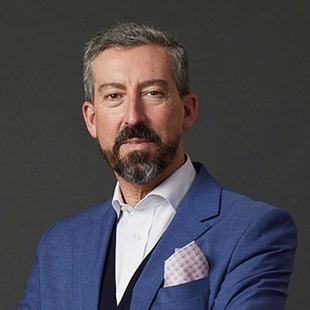
Maurizio Cavallini.
Can you tell us a little bit about what first attracted you to medicine and then what led you to specialise in plastic surgery?
From an early age, I was deeply drawn to the idea of helping others feel better and improve their quality of life. For as long as I can remember, I believed that becoming a physician would be my professional path. My interest in plastic surgery was sparked somewhat unexpectedly by a romantic film, which revealed to me how surgery could restore not only physical form, but also self-esteem, identity and emotional wellbeing. That realisation profoundly influenced my decision to pursue this specialty.
What have been your career highlights so far?
One of the most pivotal moments in my career was my decision to train and work in a major national hospital in Milan. That environment provided rigorous clinical exposure, high standards and constant intellectual stimulation. It was fundamental in shaping my surgical approach, my discipline and my professional identity, and it laid the foundation for everything that followed.
Who has inspired you along the way and what advice has stuck with you?
I have drawn inspiration from remarkable individuals both within and outside the medical field. Among physicians, Professor Christiaan Barnard had a profound influence on me, not only for performing the first human heart transplant, but for his humility, precision and meticulous planning. These are values I strive to embody in my own professional life. Outside medicine, Muhammad Ali has always inspired me for his extraordinary determination and unwavering commitment to excellence. His mindset, dedicating one’s life fully to a goal, resonates deeply with me.
What have been the most exciting developments in the field over the last decade? And the biggest challenges?
Over the past decade, regenerative medicine has represented one of the most exciting areas of biological and clinical innovation. This is evident both in aesthetic medicine, through injectable products and energy-based devices now widely available to physicians, and in surgery, particularly with the evolving applications of autologous fat. The main challenge lies in integrating these advances responsibly: understanding indications, limitations and long-term outcomes, while maintaining patient safety and scientific rigour.
You are on the Scientific Committee for the Agorà Congress taking place in October. Can you tell us about the themes and potential highlights of the event?
We aim to focus on three key themes. First, safety, particularly through an in-depth understanding of anatomy as it relates to aesthetic procedures. Second, regenerative medicine, exploring both current applications and future perspectives. Third, combined treatments, which are increasingly essential for achieving holistic and high-performance results. These require a deep knowledge of pharmacological and biological interactions, as well as precise timing in treatment protocols.
Do you enjoy your role with Agorà and medical education in general?
Very much so. Thirty years ago, while sitting in the audience, I attended a session chaired by Professor Alberto Massirone, the founder of our scientific society. I remember wondering whether I might ever reach such a role myself. Now that this aspiration has become reality, my greatest motivation is to promote knowledge at an international level, sharing experience with seriousness, openness and a genuine spirit of collaboration.
And finally, if you have any spare time, how do you like to relax?
Unfortunately, my free time is limited. However, when possible, I find great relaxation in sport and in studying history; both allow me to disconnect from daily pressures and regain perspective.
Many thanks for your time!
SAVE THE DATE
Agorà Congress
15–17 October 2026
Milan, Italy
en.agoracongress.com/